E-commerceJune 13, 2026
Enhancing E-commerce SEO with AI-powered Product Tagging
Discover how AI-powered product tagging can revolutionize your e-commerce SEO strategy, increasing visibility and improving user experience.
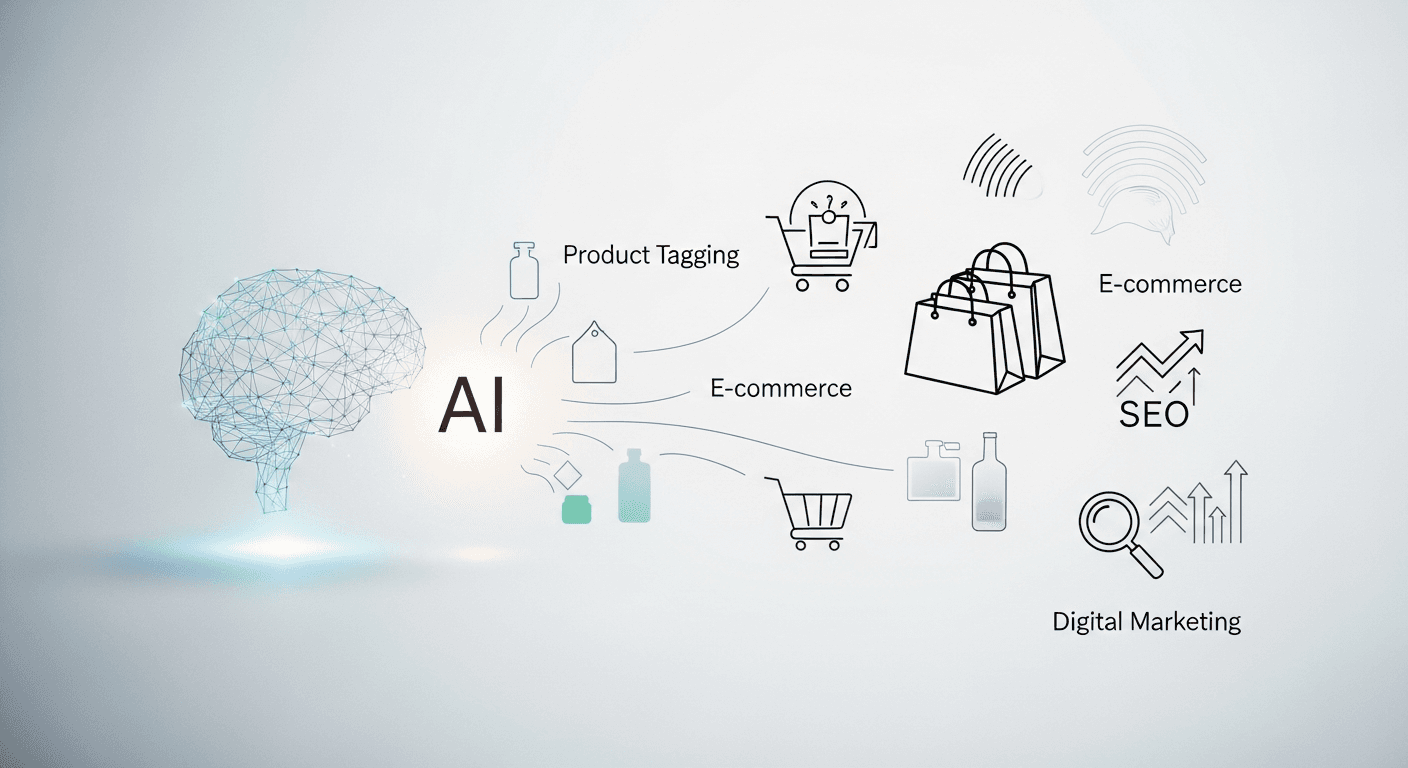
Introduction to AI-powered Product Tagging
In the ever-evolving landscape of e-commerce, standing out from the competition requires innovative strategies. One such strategy is AI-powered product tagging, which is transforming the way online retailers manage their product catalogs and enhance their SEO efforts. By leveraging artificial intelligence, businesses can automate the process of tagging products with relevant attributes, thereby improving searchability and enhancing the overall shopping experience. This capability is especially crucial in a digital marketplace where product discoverability can significantly impact sales.
AI-powered product tagging utilizes machine learning algorithms to analyze product images and descriptions, assigning appropriate tags that improve the visibility of products in search engine results. This technology not only saves time for e-commerce businesses but also ensures a higher level of accuracy compared to traditional manual tagging methods. With AI, tags can be updated dynamically as customer preferences and trends evolve, ensuring that products remain relevant and competitive.
As consumer expectations rise, the demand for highly personalized shopping experiences grows. AI-powered product tagging enables retailers to meet these demands by providing more accurate and relevant search results, ultimately leading to increased customer satisfaction and higher conversion rates. This personalization is achieved by understanding customer behavior patterns and tailoring product suggestions accordingly, fostering a more engaging shopping experience.

Benefits of AI in E-commerce SEO
The integration of AI into e-commerce SEO strategies offers numerous benefits, including enhanced accuracy in product categorization and improved efficiency in managing large inventories. AI algorithms can process vast amounts of data to identify patterns and trends, enabling businesses to optimize their product listings and attract more targeted traffic. This optimization ensures that products reach the right audience, increasing the likelihood of purchase.
- Increased accuracy in product tagging
- Improved efficiency and reduced manual effort
- Enhanced ability to analyze consumer behavior
AI-powered tools can also help identify and predict consumer behavior, allowing businesses to tailor their marketing strategies to better meet the needs of their audience. This predictive capability can lead to more effective product recommendations, thereby increasing the likelihood of sales. Additionally, by understanding customer journeys, businesses can refine their SEO strategies to focus on high-conversion keywords and phrases, ultimately boosting their ROI.
Leveraging AI in SEO not only improves search visibility but also enhances customer engagement and retention. By understanding and predicting customer needs, businesses can drive loyalty and repeat purchases.

How Product Tagging Enhances SEO
Product tagging significantly impacts SEO by ensuring that products are easily discoverable through search engines. When products are tagged with relevant keywords, they are more likely to appear in search results for those terms, increasing the chances of attracting potential customers. This method of tagging also aids in creating a more organized and navigable website, which is favored by search engine algorithms.
By automating the tagging process, AI reduces the likelihood of human error and inconsistency, which can negatively affect search rankings. Consistent and accurate tagging ensures that search engines can easily index products, leading to better visibility and higher rankings. Furthermore, AI can adapt to changing search trends, ensuring that products remain optimized for the latest search engine guidelines.
- Improves product visibility in search results
- Ensures consistent and accurate product categorization
- Enhances user experience through relevant search matches
Moreover, AI-powered tagging helps optimize metadata and improve site structure, which are critical components of SEO. By enhancing these elements, businesses can achieve better search engine performance and drive more organic traffic to their sites. This increased traffic not only boosts sales but also provides valuable insights into customer preferences and behavior, further informing SEO strategies.
Case Studies: Successful AI Tagging Implementations
Several e-commerce giants have successfully implemented AI-powered product tagging to enhance their SEO strategies. For instance, a leading fashion retailer utilized AI to streamline their product categorization process, resulting in a 30% increase in search visibility and a 20% boost in online sales. This implementation not only improved their internal efficiency but also enhanced the customer shopping experience by providing more relevant search results.
Another example is an electronics company that adopted AI tagging to manage its extensive product range. By automating the tagging process, the company reduced the time spent on manual tagging by 50%, allowing their team to focus on more strategic initiatives. This shift not only saved resources but also led to a marked improvement in product discoverability and customer satisfaction.
These case studies demonstrate the tangible benefits of AI-powered product tagging, highlighting its potential to revolutionize e-commerce SEO. By optimizing product visibility and customer engagement, businesses can achieve significant growth and competitive advantage.
Future Trends in AI and E-commerce SEO
As AI technology continues to evolve, its impact on e-commerce SEO is expected to grow. Future trends indicate a move towards more sophisticated AI algorithms capable of understanding complex consumer behaviors and preferences, leading to even more personalized shopping experiences. Businesses will increasingly rely on AI to not only tag products but also to predict market trends and consumer demands, allowing for real-time adjustments to SEO strategies.
Additionally, AI is likely to play a crucial role in voice search optimization. As more consumers use voice-enabled devices to shop online, businesses will need to adapt their SEO strategies to accommodate this shift, with AI-powered tagging being a key component of this adaptation. Voice search requires a nuanced understanding of natural language, and AI is perfectly suited to bridge this gap, ensuring that products are optimized for both text and voice queries.
The future of e-commerce lies in the hands of AI, driving innovation and enhancing consumer experiences.